Hey there, plant enthusiasts! Lucas William here, your go-to guy for all things Alocasia. Today, we’re diving deep into the lush world of Alocasia Green Velvet, a stunning houseplant that’s been turning heads in the indoor gardening scene. If you’re looking to add a touch of tropical elegance to your space, you’re in for a treat!
Before we get started, I want to remind you that at Lexivo, we’ve got all the gear you need to keep your Alocasia thriving. From perfectly sized pots to top-notch pruning shears, check out our shop at https://lexivo.com.ng/shop/ to gear up for your Green Velvet adventure.
What’s the Buzz About Alocasia Green Velvet?
Let me tell you, after 10 years of growing various Alocasia species, the Green Velvet still manages to take my breath away. This isn’t just another pretty face in the plant world – it’s a showstopper that demands attention and rewards you with its striking beauty.
The Green Velvet Lowdown
Alocasia Green Velvet, scientifically known as Alocasia ‘Green Velvet’, is a hybrid that combines the best features of its parent plants. It’s often confused with Alocasia reginula ‘Black Velvet‘, but trust me, once you see them side by side, you’ll never mix them up again.
Quick Care Guide
Here’s a handy table to get you started with your Alocasia Green Velvet care:
| Care Aspect | Requirement |
|---|---|
| Light | Bright, indirect light |
| Water | Keep soil moist, not soggy |
| Humidity | High (60-80%) |
| Temperature | 60-80°F (15-27°C) |
| Soil | Well-draining, rich potting mix |
| Fertilizer | Monthly during growing season |
The Roots of Royalty: Origin and History
Alocasia Green Velvet is a relatively new player in the houseplant game. It’s a hybrid created by plant breeders who wanted to combine the lush green color of some Alocasia species with the velvety texture of others. While its exact parentage is a bit of a mystery, it’s believed to have Alocasia reginula in its lineage.
This beauty hails from the steamy jungles of Southeast Asia, where Alocasias thrive in the humid understory of tropical forests. The Green Velvet variety was developed to bring that exotic jungle vibe into our homes, and boy, does it deliver!
What’s in a Name?
Common Name: Alocasia Green Velvet, Jewel Alocasia
Scientific Name: Alocasia ‘Green Velvet’
The name “Green Velvet” is spot-on – one touch of those leaves, and you’ll understand why. It’s like stroking the softest, plushest emerald velvet you’ve ever felt.
Why You Need an Alocasia Green Velvet in Your Life
Besides being a total knockout, Alocasia Green Velvet offers some sweet perks:
- Natural Air Purifier: Like its Alocasia cousins, it helps clean the air in your home.
- Stress Reducer: That lush green color is known to have a calming effect.
- Conversation Starter: Trust me, everyone who visits will ask about this plant.
- Low Maintenance (for an Alocasia): It’s more forgiving than some other Alocasia varieties.
The Green Velvet Glow-Up: Appearance and Characteristics
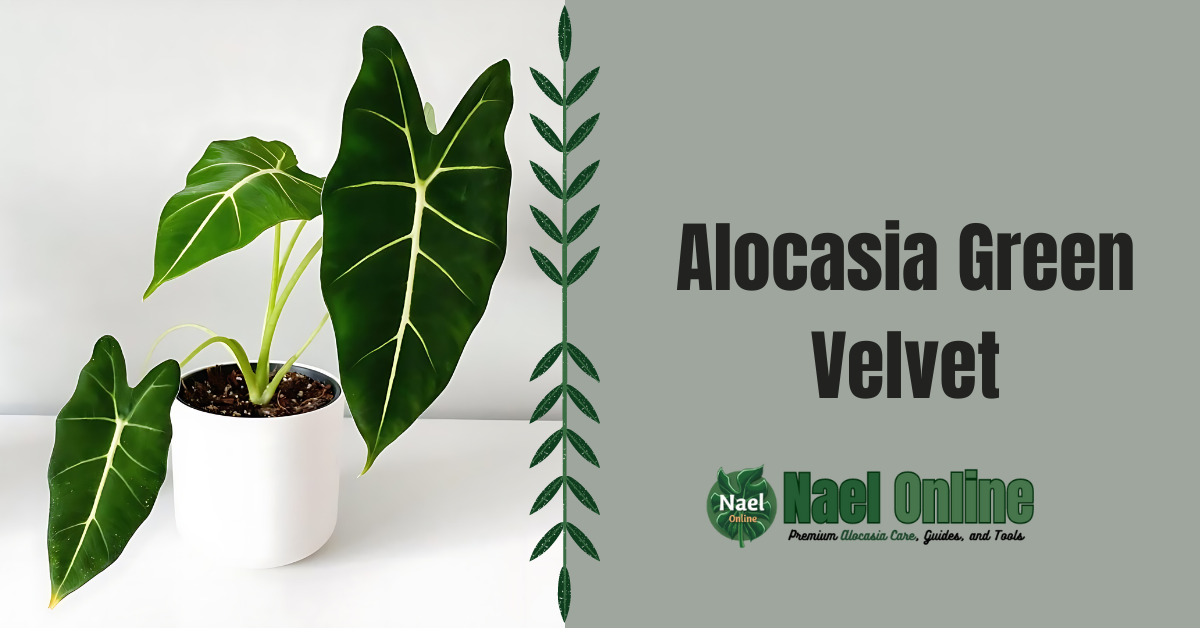
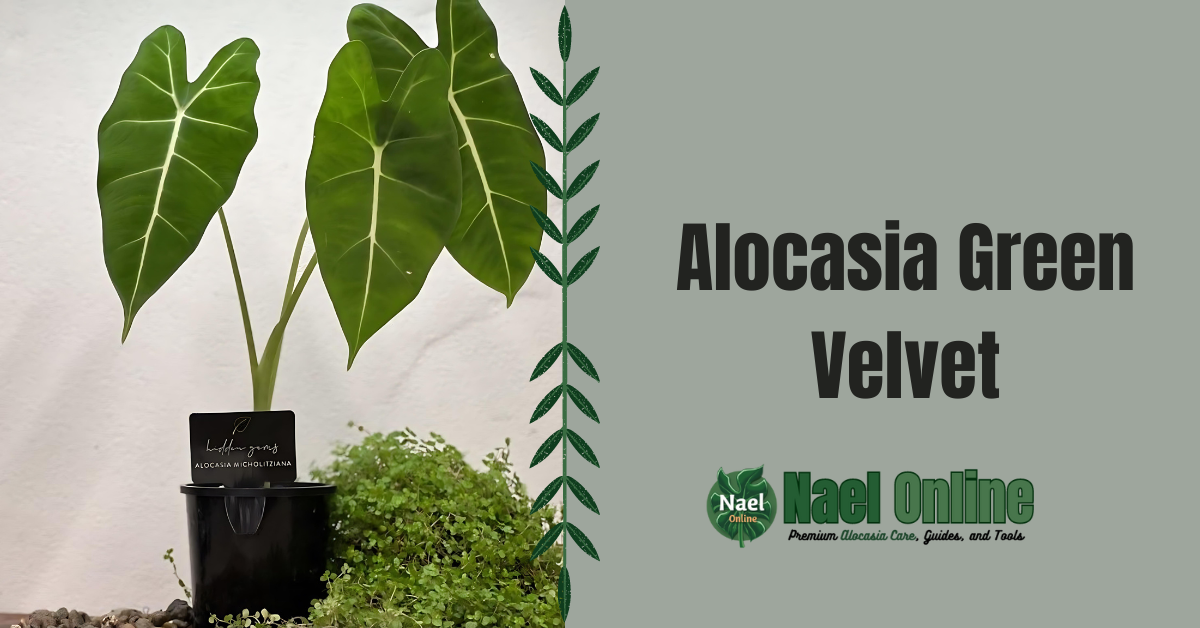
Picture this: heart-shaped leaves so dark green they almost look black in certain light, with prominent silvery-white veins that pop against the velvety surface. The leaves can grow up to 8-12 inches long, creating a compact but impactful display.
What sets Alocasia Green Velvet apart is its texture. The leaves have a soft, fuzzy feel that’s irresistible to touch (but try to resist – oils from our hands can damage the leaves). The undersides of the leaves are a lighter green with reddish-purple tones, adding to its allure.
Caring for Your Green Velvet: The Nitty-Gritty
Alright, let’s roll up our sleeves and get into the details of keeping your Alocasia Green Velvet happy and healthy.
Light: Bright but Not Burnt
Alocasia Green Velvet loves bright, indirect light. In my experience, an east-facing window is ideal. If you’ve got a south or west window, use a sheer curtain to filter the harsh afternoon sun. Too much direct light will scorch those beautiful leaves, and we don’t want that!
Water: The Goldilocks Zone
Here’s where many folks stumble with Alocasias. They like their soil moist but not waterlogged. I water mine when the top inch of soil feels dry. In summer, this might be twice a week, while in winter, it could be once every 10 days.
Pro tip: Use filtered water or let tap water sit out overnight to evaporate chlorine.
Humidity: Crank It Up
Remember, this plant’s ancestors lived in tropical jungles. Aim for 60-80% humidity. I use a humidifier, but grouping plants and pebble trays work too. If you see brown edges on the leaves, your air’s probably too dry.
Temperature: Keep It Cozy
Alocasia Green Velvet thrives in temperatures between 60-80°F (15-27°C). Avoid cold drafts and sudden temperature changes. If it drops below 55°F (13°C), your plant might go dormant.
Soil: Well-Draining is Key
I mix my own soil for Alocasias: 1 part potting soil, 1 part perlite, and 1 part orchid bark. This ensures good drainage while retaining enough moisture.
Fertilizer: Feed Me, Seymour!
During the growing season (spring and summer), I fertilize monthly with a balanced, water-soluble fertilizer diluted to half-strength. In fall and winter, I cut back to once every 6-8 weeks.
Propagation: Spreading the Green Velvet Love
Ready to make more Green Velvets? Here’s how I do it:
- Division: The easiest method. During repotting, gently separate the plant into smaller sections, ensuring each has roots and a few leaves.
- Rhizome Cuttings: If you spot a rhizome with a growth point, you can carefully cut it off and plant it in moist soil.
- Leaf Cuttings: This is trickier but possible. Cut a leaf with a bit of stem, dip in rooting hormone, and plant in moist soil.
Keep your propagations warm and humid, and be patient – it can take a few weeks to see new growth.
Pruning: Keeping Your Green Velvet Prim and Proper
Alocasia Green Velvet doesn’t need much pruning, but here’s what I do:
- Remove any yellow or damaged leaves at the base.
- If the plant gets too tall, you can cut back the oldest, outermost stems to encourage bushier growth.
- Always use clean, sharp pruning shears (check out the ones we offer at https://lexivo.com.ng/shop/).
Repotting: Give Those Roots Room to Groove
I repot my Green Velvet every 1-2 years, or when I see roots peeking out of the drainage holes. Here’s my process:
- Choose a pot 1-2 inches larger in diameter.
- Gently remove the plant from its current pot.
- Loosen the root ball and remove any rotted roots.
- Place in the new pot with fresh soil mix.
- Water thoroughly and place in a bright, indirect light spot.
The Dark Side: Toxicity
Heads up, pet parents and kiddo caretakers! Alocasia Green Velvet contains calcium oxalate crystals, which are toxic if ingested. Keep it out of reach of curious mouths, furry or otherwise.
Battling the Baddies: Common Pests and Diseases
In my decade of Alocasia growing, I’ve faced off with a few recurring villains:
- Spider Mites: Tiny pests that cause stippling on leaves. Regular misting and neem oil treatments help.
- Mealybugs: White, cottony pests that cluster on stems and leaf joints. I remove them with a cotton swab dipped in rubbing alcohol.
- Root Rot: Caused by overwatering. Prevention is key – ensure good drainage and don’t let your plant sit in water.
- Leaf Spot: Fungal disease causing brown spots. Remove affected leaves and improve air circulation.
Green Velvet vs. The World: Comparing Alocasia Varieties
While I love my Green Velvet, it’s worth knowing how it stacks up against its Alocasia cousins:
- Alocasia Black Velvet: Darker leaves, more compact growth
- Alocasia Polly: Larger, arrow-shaped leaves with dramatic white veins
- Alocasia Amazonica: Similar to Polly, but with darker green leaves
- Alocasia Frydek: Larger leaves with more pronounced white veins
The Green Velvet hits a sweet spot of manageable size and stunning foliage that makes it a favorite for many indoor gardeners.
Where to Snag Your Own Green Velvet
Ready to add an Alocasia Green Velvet to your collection? You’re in luck! These beauties are becoming more widely available. Check out local nurseries, specialty plant shops, or online retailers. Prices typically range from $20 to $50, depending on the size and rarity.
Remember, when buying online, always choose reputable sellers to ensure you’re getting a healthy, properly identified plant.
FAQs: Your Green Velvet Questions Answered
Q: Why are my Alocasia Green Velvet’s leaves turning yellow?
A: This is usually due to overwatering or poor drainage. Check your watering habits and ensure your pot has drainage holes.
Q: My Green Velvet isn’t growing new leaves. What’s wrong?
A: It might be dormant, especially if it’s winter. Ensure it’s getting enough light and humidity, and be patient – new growth will come.
Q: Can I grow Alocasia Green Velvet outdoors?
A: In USDA zones 10-11, yes. For most of us, it’s best as an indoor plant or a summer patio guest.
Q: How often should I clean the leaves?
A: I gently wipe mine with a damp cloth monthly to keep them dust-free and looking their best.
Q: My Green Velvet is getting too tall. Can I cut it back?
A: Yes, you can prune the oldest, outermost stems to encourage bushier growth.
There you have it, folks – everything you need to know about the stunning Alocasia Green Velvet. With its velvety leaves and easy-going nature (for an Alocasia), it’s no wonder this plant has stolen the hearts of so many indoor gardeners, including yours truly.
Remember, if you need any supplies for your Green Velvet journey, from pots to pruning shears, swing by our shop at https://lexivo.com.ng/shop/. We’ve got everything you need to keep your Alocasia thriving.
Happy growing, and may your thumbs always be green!
Lucas William
Lexivo