I still remember the first Alocasia Jacklyn I brought home from a small plant shop in Abeokuta. Its bold leaves looked strong, but within days, the soil stayed wet and the plant began to droop. That moment taught me that Jacklyn needs special care, even in our warm Ogun State weather.
Unlike many Alocasia types, Jacklyn likes fast-draining soil and careful watering. Too much water can damage the roots and slow new growth.
This Alocasia Jacklyn care guide shares simple, proven tips to help your plant stay healthy, grow new leaves, and keep its deep green color all year round.
What’s All the Buzz About Alocasia Jacklyn Care?
Alocasia Jacklyn is a relatively new player in the houseplant scene, but it’s already turning heads with its unique appearance. This tropical beauty combines striking foliage with a manageable size, making it perfect for both newbies and seasoned plant parents. It’s like having a piece of undiscovered rainforest right in your living room!
Quick Care Guide: Alocasia Jacklyn at a Glance
Here’s a handy table to give you a quick overview of what your Alocasia Jacklyn needs:
| Care Aspect | Requirement |
|---|---|
| Light | Bright, indirect light |
| Water | Keep soil consistently moist, not soggy |
| Humidity | High (60-80%) |
| Temperature | 65-80°F (18-27°C) |
| Soil | Well-draining, rich aroid mix |
| Fertilizer | Monthly during growing season |
| Pruning | Remove yellow or damaged leaves |
| Repotting | Every 1-2 years |
Now that we’ve got the basics covered, let’s dive deeper into understanding and mastering Alocasia Jacklyn care.
Getting to Know Your Alocasia Jacklyn
Origin and History: A Tropical Mystery
Alocasia Jacklyn, despite its popularity, has a bit of a mysterious background. It’s believed to be native to Northern Sulawesi in Indonesia. Interestingly, the name “Jacklyn” (often misspelled as “Jacklyn”) comes from Enjie Jacklin, a local from Gorontalo who first popularized this plant online. However, many Indonesian growers and collectors prefer the name Alocasia tandurusa, which is considered more accurate.
What’s in a Name?
- Common Name: Alocasia Jacklyn, Alocasia tandurusa
- Scientific Name: Alocasia sp. ‘Jacklyn’ (Note: The exact species is still under debate)
The Benefits of Bringing Alocasia Jacklyn Home
Besides being a knockout in the looks department, Alocasia Jacklyn offers some great benefits:
- Air purification: Like many tropical plants, it helps clean the air in your home.
- Rarity factor: Its uncommon status makes it a great conversation starter.
- Compact size: Perfect for adding a tropical touch without overwhelming your space.
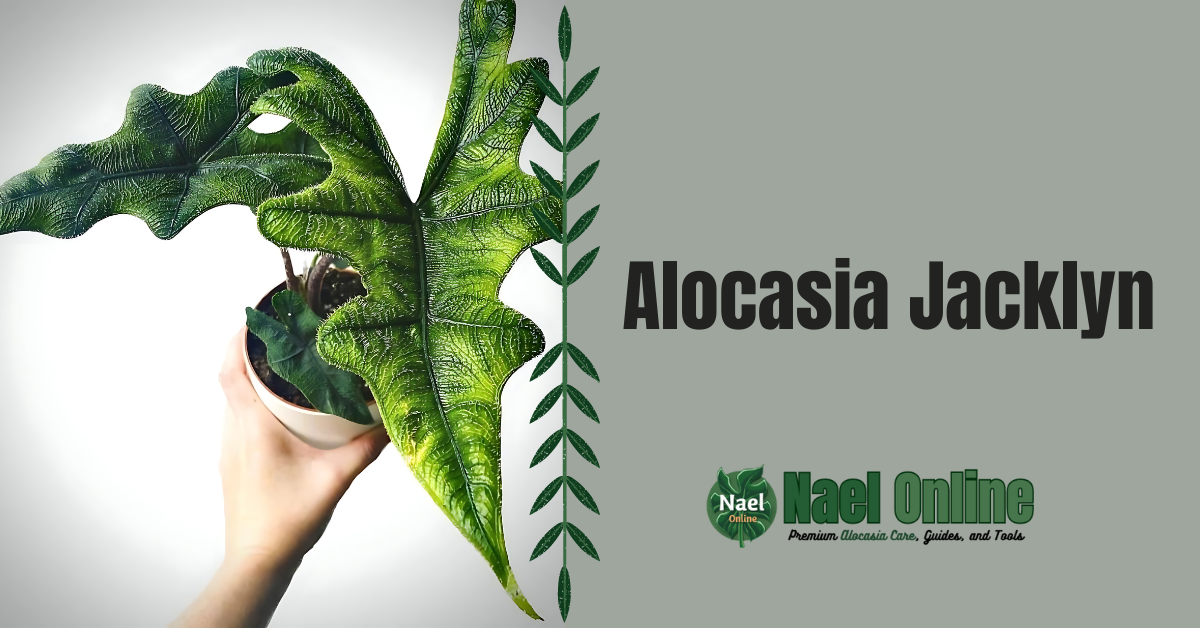
Appearance and Characteristics: A True Beauty
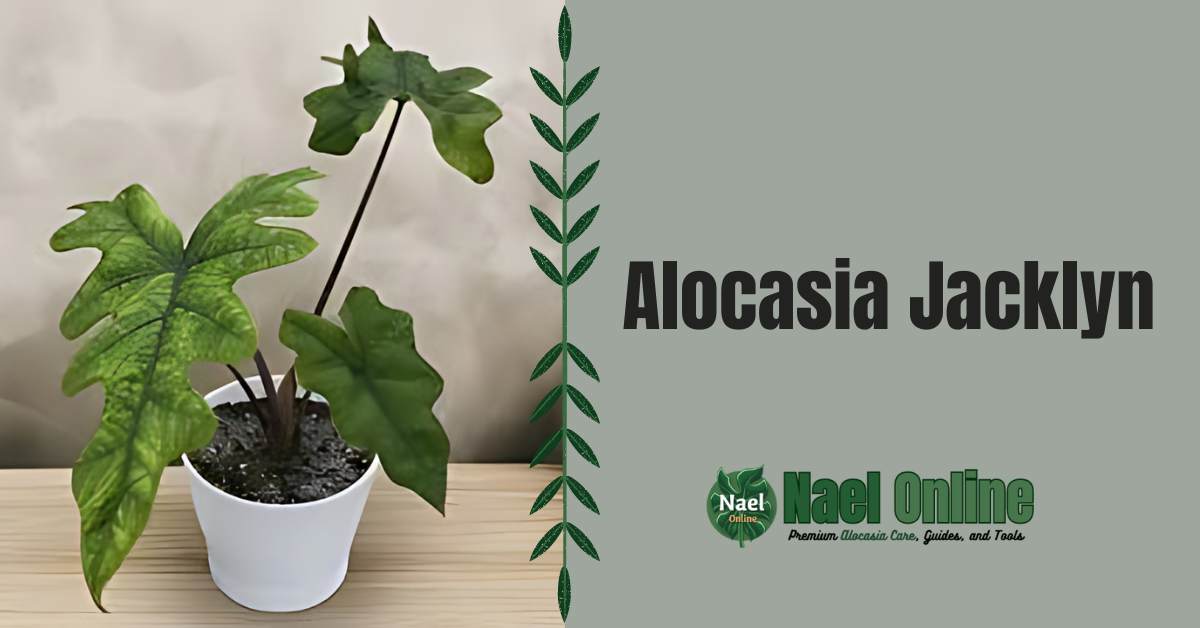
Alocasia Jacklyn is a medium-sized plant that can grow up to 2-3 feet tall indoors. Here’s what makes it stand out:
- Leaves: Large, arrow-shaped leaves with a glossy texture and prominent veins
- Size: Typically grows 2-3 feet tall and 1-2 feet wide
- Growth habit: Upright with leaves emerging from a central stem
Unique Features: Why Alocasia Jacklyn Steals the Show
What sets Alocasia Jacklyn apart from its relatives?
- Leaf texture: The leaves have a unique, slightly wavy texture that catches the light beautifully.
- Vein pattern: The contrast between the dark green leaves and lighter veins is truly eye-catching.
- Rarity: Its uncommon status makes it a prized addition to any plant collection.
Now that you’re acquainted with your Alocasia Jacklyn, let’s roll up our sleeves and get into the nitty-gritty of care.
Alocasia Jacklyn Care: A Detailed Guide
After growing various Alocasia species for years in different conditions across the Nigeria, I’ve learned a thing or two about keeping these beauties happy. Here’s what you need to know for successful Alocasia Jacklyn care:
Light: Finding the Sweet Spot
Alocasia Jacklyn thrives in bright, indirect light. In my experience, an east-facing window is ideal. If you’re placing it near a south or west-facing window, use a sheer curtain to filter the intense afternoon sun. I’ve found that too much direct sunlight can scorch those beautiful leaves, while too little light leads to leggy growth and faded patterns.
Water: The Goldilocks Approach
When it comes to watering your Alocasia Jacklyn, think “consistently moist, not soggy.” Here’s my tried-and-true method:
- Water when the top inch of soil feels slightly dry to the touch.
- Use room temperature water to avoid shocking the roots.
- Water thoroughly until it drains from the bottom, then empty the saucer.
Pro tip: These plants are sensitive to chemicals in tap water. If possible, use rainwater or filtered water for the best Alocasia Jacklyn care.
Humidity: Embracing the Tropical Vibes
As a tropical plant, Alocasia Jacklyn loves humidity. Aim for 60-80% humidity if you can. Here are some ways to increase humidity:
- Use a pebble tray filled with water
- Group it with other plants
- Run a humidifier nearby
I’ve found that consistent humidity not only keeps the leaves looking glossy but also helps prevent brown leaf edges.
Temperature: Keeping It Cozy
Your Alocasia Jacklyn prefers temperatures between 65-80°F (18-27°C). Avoid cold drafts and sudden temperature changes. In winter, keep it away from chilly windows and heating vents.
Soil: The Foundation of Health
A well-draining, rich aroid mix is crucial for Alocasia Jacklyn care. I use a mix of:
- 2 parts good quality potting soil
- 1 part perlite or pumice
- 1 part orchid bark
- 1 part coco coir
This blend provides the perfect balance of moisture retention and drainage.
Fertilizer: Feeding Your Exotic Beauty
During the growing season (spring and summer), feed your Alocasia Jacklyn monthly with a balanced, water-soluble fertilizer diluted to half strength. I’ve had great results with a 10-10-10 NPK ratio. Remember to stop fertilizing in fall and winter when growth slows down.
Now that we’ve covered the basics of Alocasia Jacklyn care, let’s dive into some more advanced topics to help you become a true Alocasia pro!
Advanced Alocasia Jacklyn Care: Taking Your Plant to the Next Level
Propagation: Multiplying Your Alocasia Family
Propagating Alocasia Jacklyn can be a bit tricky, but it’s so rewarding! Here’s my step-by-step guide:
- Wait for your plant to produce offsets (baby plants) at the base.
- Carefully remove the offset, ensuring it has some roots attached.
- Plant the offset in a small pot with well-draining soil.
- Keep the soil moist and maintain high humidity (a clear plastic bag over the pot works wonders).
- Be patient – it can take several weeks for the offset to establish.
Pruning: Keeping Your Alocasia Jacklyn Pristine
Pruning isn’t just about aesthetics; it’s crucial for your plant’s health. Here’s what I do:
- Remove any yellow, brown, or damaged leaves at the base of the stem.
- Use clean, sharp scissors or pruning shears to avoid damaging the plant.
- Prune in spring or early summer for best results.
Remember, Alocasia Jacklyn naturally sheds older leaves as new ones grow. Don’t panic if you see a leaf or two yellowing – it’s part of the plant’s lifecycle.
Repotting: Giving Your Alocasia Room to Grow
Repotting every 1-2 years keeps your Alocasia Jacklyn healthy and thriving. Here’s my repotting routine:
- Choose a pot 1-2 inches larger in diameter than the current one.
- Ensure the new pot has drainage holes.
- Gently remove the plant from its current pot, being careful not to damage the roots.
- Place in the new pot with fresh potting mix (remember our special mix from earlier?).
- Water thoroughly and place in a bright, indirect light spot.
Pro tip: Spring is the best time for repotting, as the plant is entering its active growth phase.
Toxicity: Keeping Pets and Kids Safe
It’s important to note that Alocasia Jacklyn, like all Alocasia species, is toxic if ingested. The plant contains calcium oxalate crystals that can cause irritation and swelling in the mouth and throat. Keep it out of reach of children and pets, and always wash your hands after handling the plant.
Common Pests and Diseases: Staying Vigilant
Even with the best Alocasia Jacklyn care, pests and diseases can sometimes be an issue. Here’s what to watch out for:
- Spider mites: Tiny pests that cause stippling on leaves. Treat with neem oil or insecticidal soap.
- Mealybugs: White, cottony bugs that cluster on stems and leaf joints. Remove with a cotton swab dipped in rubbing alcohol.
- Root rot: Caused by overwatering. Ensure good drainage and avoid waterlogged soil.
Regular inspection and prompt treatment are key to keeping your Alocasia Jacklyn healthy and pest-free.
Alocasia Jacklyn vs. Other Alocasia Species
While Alocasia Jacklyn is a stunner, it’s just one of many beautiful Alocasia species. Here’s how it compares to some of its cousins:
- Alocasia Zebrina: Known for its zebra-striped stems, it has a completely different leaf shape from Jacklyn.
- Alocasia Frydek: Similar leaf shape, but Frydek has velvety leaves with more pronounced white veins.
- Alocasia Polly: Smaller leaves with more dramatic white veins compared to Jacklyn.
Each has its unique charm, but Alocasia Jacklyn remains a favorite for its rarity and striking leaf pattern.
Where to Find Your Perfect Alocasia Jacklyn
Ready to bring home your own Alocasia Jacklyn? You’re in for a bit of a treasure hunt! Due to its rarity, Alocasia Jacklyn can be challenging to find. Your best bet is to check with specialty plant shops, online plant retailers, and even local plant swap groups.
And of course, don’t forget to check out our shop at Lexivo (https://lexivo.com.ng/shop/) for all the supplies you’ll need to master Alocasia Jacklyn care. From the perfect pots to premium potting mix, we’ve got you covered!
Alocasia Jacklyn Price: What to Expect
The price of an Alocasia Jacklyn can vary widely depending on size, rarity, and availability. Generally, you can expect to pay anywhere from $50 to $200 or more for a small to medium-sized plant. Larger, more mature specimens may cost significantly more.
Remember, investing in a healthy plant from a reputable source is worth it in the long run. A well-cared-for Alocasia Jacklyn will bring you joy for years to come!
FAQs
To wrap up our comprehensive guide, let’s address some common questions I often get about Alocasia Jacklyn care:
Why are my Alocasia Jacklyn’s leaves turning yellow?
Yellowing leaves can be caused by overwatering, underwatering, or lack of nutrients. Check your watering routine and consider fertilizing if it’s been a while.
My Alocasia Jacklyn isn’t growing new leaves. What’s wrong?
Alocasia Jacklyn has a growth cycle where it focuses on one leaf at a time. Be patient – new growth will come!
Can I grow Alocasia Jacklyn outdoors?
In USDA zones 10-11, you can grow Alocasia Jacklyn outdoors. In cooler climates, it’s best kept as an indoor plant or moved outside only during warm months.
How often should I clean the leaves?
Dust the leaves gently with a soft, damp cloth every few weeks to keep them looking their best and to help the plant photosynthesize efficiently.
My Alocasia Jacklyn seems to be going dormant. What should I do?
It’s normal for Alocasia to go dormant in winter. Reduce watering and stop fertilizing until you see signs of new growth in spring.
There you have it, folks – everything you need to know about Alocasia Jacklyn care. Remember, every plant is unique, and part of the joy of plant parenthood is learning your plant’s individual needs.
If you’re ready to start your Alocasia Jacklyn journey, don’t forget to check out our shop at Lexivo (https://lexivo.com.ng/shop/) for all your plant care essentials. From the perfect pot to premium potting mix, we’ve got everything you need to give your Alocasia Jacklyn the best start in its new home.
Happy planting, and may your Alocasia Jacklyn thrive and bring you joy for years to come!


