Alocasia Scalprum was one of the first rare Alocasia plants I tried to grow in Ogun State. I placed it outside under light shade, thinking our warm air would help it grow faster. Instead, the leaves became thin and weak after heavy rain.
With time, I learned that this plant likes calm light, loose soil, and slow watering. It does not enjoy sitting in wet soil for long. Once I changed the soil mix and moved it to a covered spot, new leaves began to appear.
In this guide, you will find simple tips that help Alocasia Scalprum stay strong, keep its dark green color, and grow well indoors or on a shaded porch.
What is Alocasia Scalprum?
Alocasia scalprum, often called the Scalprum Alocasia, is a show-stopping tropical plant that’s been gaining popularity among plant enthusiasts. With its uniquely shaped leaves and compact growth habit, it’s no wonder this beauty has become a sought-after addition to indoor jungles across the United States.
Origin and History
Native to the lush rainforests of Southeast Asia, particularly the Philippines, Alocasia scalprum has adapted to thrive in warm, humid environments. Its natural habitat provides clues to its care requirements, which we’ll dive into shortly.
Common Name
While Alocasia scalprum doesn’t have a widely recognized common name, some plant lovers affectionately call it the “Scalpel Alocasia” due to its distinctively shaped leaves.
Scientific Name
The scientific name, Alocasia scalprum, comes from the Greek words “a” (without) and “colocasia” (an edible tuber), combined with “scalprum,” which means chisel or knife in Latin, referring to the leaf shape.
Benefits of Growing Alocasia Scalprum
- Air Purification: Like many Alocasia species, A. scalprum helps cleanse indoor air of common pollutants.
- Aesthetic Appeal: Its unique foliage adds a tropical touch to any space.
- Low Maintenance: Once you nail the basics, it’s relatively easy to care for.
- Conversation Starter: Trust me, your plant-loving friends will be green with envy!
Appearance and Characteristics
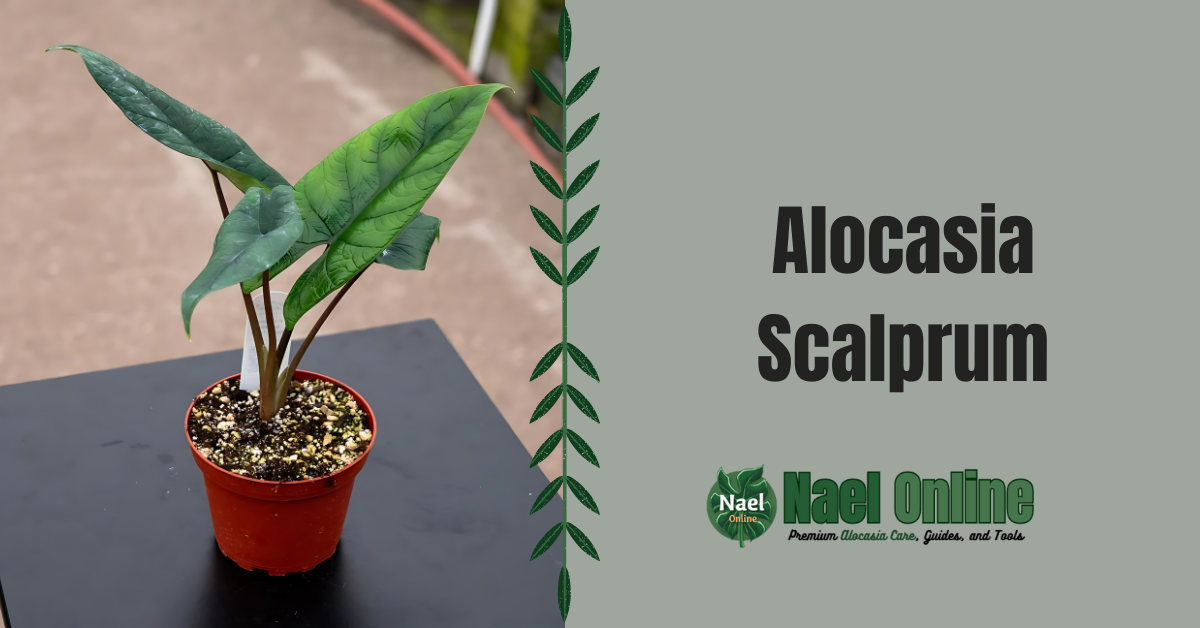
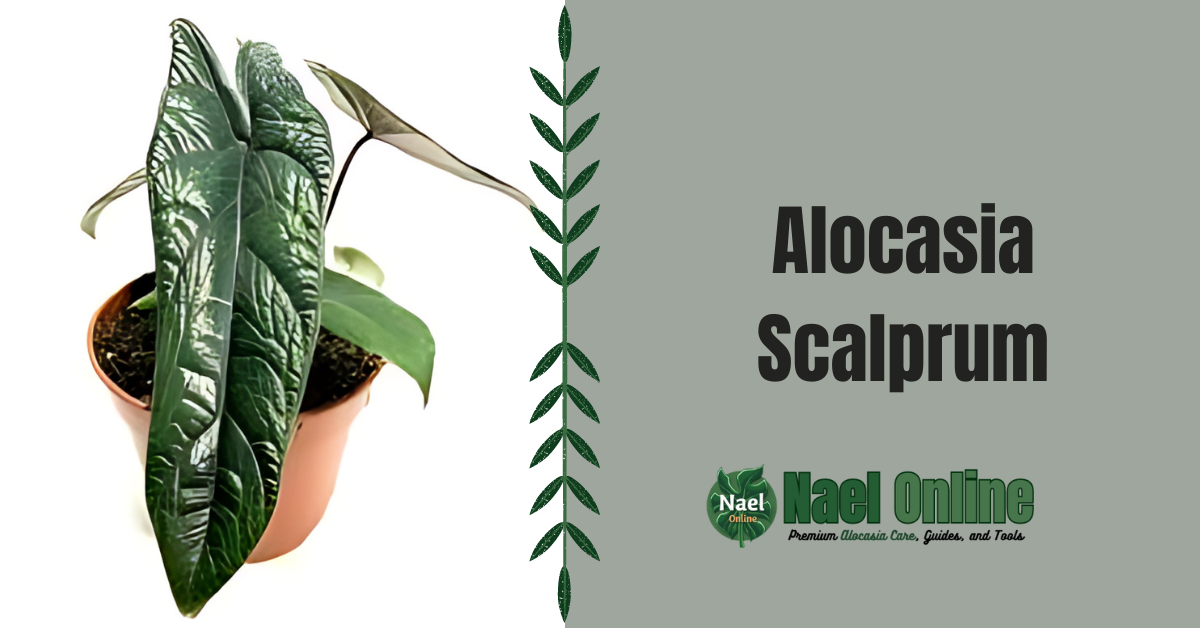
Alocasia scalprum is a compact plant, typically growing to about 2-3 feet tall. Its standout feature is its leaves – elongated, arrow-shaped beauties that can reach up to 12 inches in length. The foliage boasts a deep green color with prominent veining, giving it a sophisticated, textured look.
Unique Features
What sets Alocasia scalprum apart is its leaf shape. Unlike the broader leaves of its cousins like Alocasia Polly or Alocasia Amazonica, A. scalprum sports narrow, elongated leaves that taper to a point, resembling a scalpel or knife blade. This distinctive shape gives the plant an elegant, almost architectural appearance.
Caring and Growing Guide for Alocasia Scalprum
Alright, mates, let’s get down to the nitty-gritty of keeping your Alocasia scalprum happy and thriving. After years of trial and error (and yes, a few casualties along the way), I’ve nailed down the perfect care routine for these beauties.
| Care Aspect | Requirement |
|---|---|
| Light | Bright, indirect light |
| Water | Keep soil moist but not waterlogged |
| Humidity | High (60-80%) |
| Temperature | 65-80°F (18-27°C) |
| Soil | Well-draining, rich in organic matter |
| Fertilizer | Balanced, liquid fertilizer monthly during growing season |
Light Requirements
Alocasia scalprum thrives in bright, indirect light. In its natural habitat, it grows under the dappled sunlight of the forest canopy. To recreate this at home, place your plant near an east-facing window or a few feet back from a south or west-facing window. If you notice the leaves turning yellow or developing brown spots, it might be getting too much direct sun.
Watering Needs
When it comes to watering your Alocasia scalprum, consistency is key. These plants prefer their soil to be consistently moist but not waterlogged. I’ve found that watering when the top inch of soil feels dry to the touch works well. Use room temperature water and water thoroughly until it drains from the bottom of the pot.
Pro tip: Alocasia scalprum is sensitive to chlorine and fluoride in tap water. If possible, use rainwater or filtered water for best results.
Humidity
Here’s where Alocasia scalprum can be a bit demanding. These tropical beauties crave high humidity, ideally between 60-80%. If you’re in a dry climate (like some parts of the US), you might need to step up your humidity game. A humidifier works wonders, but you can also use pebble trays or group your plants together to create a mini humid microclimate.
Temperature
Alocasia scalprum prefers warm temperatures between 65-80°F (18-27°C). It can tolerate slightly cooler temps, but anything below 60°F (15°C) can cause stress and leaf drop. Keep it away from cold drafts and air conditioning vents.
Soil and Potting
The key to happy Alocasia scalprum roots is well-draining, nutrient-rich soil. I’ve had great success with a mix of:
- 2 parts good quality potting soil
- 1 part perlite or pumice
- 1 part orchid bark
This blend provides excellent drainage while retaining enough moisture to keep the roots happy.
Fertilizing
During the growing season (spring and summer), feed your Alocasia scalprum monthly with a balanced, liquid fertilizer diluted to half strength. I prefer organic options like fish emulsion or seaweed fertilizer. In fall and winter, cut back to feeding every 6-8 weeks or stop altogether if growth slows significantly.
Remember, folks, when it comes to Alocasia scalprum care, it’s all about creating a little slice of tropical paradise right in your home. With these care tips and the right tools from our shop at https://lexivo.com.ng/shop/, you’ll be well on your way to Alocasia success!
Detailed Propagation Guide
Propagating Alocasia scalprum can be a rewarding experience. Here are the methods I’ve found most successful:
1. Division
This is my go-to method for Alocasia scalprum propagation. It’s best done during repotting in spring.
- Gently remove the plant from its pot.
- Shake off excess soil to expose the root system.
- Look for natural divisions or separate offshoots with their own roots.
- Using a clean, sharp knife, carefully separate the offshoots from the mother plant.
- Pot each division in its own container with fresh, well-draining soil.
- Water thoroughly and place in a warm, humid spot with indirect light.
2. Rhizome Cuttings
This method is a bit more advanced but can yield multiple new plants.
- Expose the rhizome (thick, horizontal stem) by removing some soil.
- Cut a section of rhizome with at least one growth point using a sterilized knife.
- Allow the cut end to callous over for a day.
- Plant the rhizome cutting horizontally in moist, well-draining soil.
- Keep the soil consistently moist and warm (around 75°F or 24°C).
- New growth should appear within 4-6 weeks.
Detailed Pruning Guide
Pruning your Alocasia scalprum isn’t just about aesthetics – it’s crucial for the plant’s health and vigor. Here’s how I approach it:
- Remove yellowing or damaged leaves: These drain energy from the plant. Cut them off at the base of the stem using clean, sharp pruning shears.
- Control size: If your plant is getting too large, you can remove older, lower leaves to maintain a compact shape.
- Encourage new growth: Pruning can stimulate the plant to produce new leaves. After pruning, you might notice increased growth from the center of the plant.
- Clean up: Always remove any fallen leaves or debris from the soil surface to prevent pest and disease issues.
Remember to sanitize your pruning tools before and after use to prevent the spread of diseases.
Detailed Repotting Guide
Alocasia scalprum typically needs repotting every 1-2 years, or when you notice roots growing out of the drainage holes. Here’s my tried-and-true repotting process:
- Choose a pot 1-2 inches larger in diameter than the current one, with good drainage holes.
- Prepare your potting mix (remember that well-draining recipe I mentioned earlier).
- Carefully remove the plant from its current pot. Gently loosen the root ball and remove any old, compacted soil.
- Inspect the roots. Trim any that are dead, damaged, or excessively long.
- Place a layer of fresh potting mix in the new pot.
- Position your Alocasia scalprum in the center of the new pot, making sure it’s at the same depth as it was in the old pot.
- Fill in around the roots with fresh potting mix, gently tamping down to remove air pockets.
- Water thoroughly and place in a spot with bright, indirect light.
Pro tip: After repotting, your Alocasia scalprum might sulk a bit. Don’t worry – this is normal. Just maintain consistent care, and it’ll bounce back in no time.
Toxicity
It’s important to note that like other Alocasia species, Alocasia scalprum contains calcium oxalate crystals, which are toxic if ingested. Keep this plant out of reach of children and pets. If ingestion occurs, seek medical attention immediately.
Common Pests and Diseases
In my years of growing Alocasia scalprum, I’ve encountered a few pesky problems. Here’s how to spot and tackle them:
Pests
- Spider Mites: These tiny pests can cause stippling on leaves. Regular misting and increasing humidity can help prevent infestations.
- Mealybugs: Look for white, cottony masses on leaves and stems. Treat with neem oil or insecticidal soap.
- Scale: These appear as small, brown bumps on stems and leaves. Remove manually with a cotton swab dipped in rubbing alcohol.
Diseases
- Root Rot: Caused by overwatering or poor drainage. Symptoms include yellowing leaves and a foul smell from the soil. Treat by removing affected roots and repotting in fresh, well-draining soil.
- Leaf Spot: Fungal disease causing brown spots on leaves. Improve air circulation and avoid getting water on leaves when watering.
- Xanthomonas: A bacterial disease causing yellow, water-soaked spots on leaves. Remove affected leaves and avoid overhead watering.
Prevention is key – always use sterilized tools and pots, and quarantine new plants before introducing them to your collection.
Comparison with Other Alocasia Species and Varieties
While Alocasia scalprum is a stunner in its own right, it’s worth comparing it to some of its cousins:
- Alocasia Polly (A. amazonica): Larger leaves with more pronounced white veining. Tends to be more common in cultivation.
- Alocasia Zebrina: Known for its zebra-striped stems rather than its leaves.
- Alocasia Frydek: Similar care needs, but with velvety, dark green leaves and prominent white veins.
- Alocasia Black Velvet: Smaller than A. scalprum, with nearly black leaves and silvery veins.
Alocasia scalprum stands out with its uniquely shaped, elongated leaves, making it a perfect choice for plant enthusiasts looking for something a bit different.
Alocasia Scalprum for Sale
Ready to add this beauty to your collection? While we don’t sell plants directly at Lexivo, you can find Alocasia scalprum at many reputable online plant shops and local nurseries. When buying, look for plants with:
- Healthy, undamaged leaves
- No signs of pests or diseases
- Firm, plump stems
Remember, once you’ve got your new plant, head over to https://lexivo.com.ng/shop/ for all the care essentials you’ll need!
Alocasia Scalprum Price
Prices for Alocasia scalprum can vary depending on the size and rarity of the plant. Generally, you can expect to pay anywhere from $30 to $100 for a well-established plant. Smaller, younger plants might be available for less, while rare variegated varieties can fetch higher prices.
Frequently Asked Questions
1. Why are my Alocasia scalprum’s leaves turning yellow?
Yellowing leaves can be caused by overwatering, underwatering, or insufficient light. Check your watering routine and light conditions, and adjust as needed.
2. Can Alocasia scalprum be grown outdoors?
In warm, humid climates (USDA zones 9-11), Alocasia scalprum can be grown outdoors in partial shade. However, it’s primarily grown as an indoor plant in most regions.
3. How often should I clean the leaves of my Alocasia scalprum?
Dust the leaves gently with a soft, damp cloth every 2-3 weeks to keep them clean and allow for better photosynthesis.
4. My Alocasia scalprum isn’t producing new leaves. What’s wrong?
This could be due to dormancy (normal in winter), insufficient light, or inadequate nutrients. Ensure your plant is getting enough light and consider fertilizing if you haven’t recently.
5. Can I propagate Alocasia scalprum from leaf cuttings?
Unlike some plants, Alocasia scalprum cannot be propagated from leaf cuttings. Stick to division or rhizome cuttings for successful propagation.
In conclusion, Alocasia scalprum is a fantastic addition to any indoor jungle. With its unique leaf shape and compact size, it’s perfect for adding a touch of tropical elegance to your space. Remember, success with this plant comes down to mimicking its natural habitat – warm, humid, and bright but protected from direct sun.
If you’re ready to embark on your Alocasia scalprum journey, don’t forget to check out our range of plant care essentials at https://lexivo.com.ng/shop/. From perfectly sized pots to specialized Alocasia fertilizers, we’ve got everything you need to help your new green friend thrive.
Happy growing, plant lovers!


