
If you’re reading this, chances are you’ve fallen in love with Alocasia.
Maybe you saw one at a plant shop in Lekki or Victoria Island.
Or perhaps a friend showed off their stunning Alocasia Zebrina on Instagram.
These plants are gorgeous—no doubt about that.
But here’s the thing: Alocasia care in Nigeria comes with its own unique challenges.
I’ve been growing Alocasias in Lagos for over five years now.
I’ve killed a few (yes, really).
I’ve nursed others back from the brink of death.
And I’ve learned what works in our humid, unpredictable Nigerian climate.
This guide will walk you through everything you need to know about growing Alocasia indoors in Nigeria.
From choosing the right variety to dealing with Lagos’ erratic power supply.
Let’s dive in.
What Makes Alocasia Special (and Why Nigerians Love Them)
Alocasia plants belong to the Araceae family.
They’re also called Elephant Ear plants because of their large, stunning leaves.
Some varieties have dark green foliage.
Others feature silvery veins or metallic sheens.
The aesthetic appeal is unmatched.
That’s why they’ve become so popular among Nigerian plant lovers.
Especially those of us living in apartments in Lagos, Abuja, or Port Harcourt.
But beauty comes with responsibility.
These plants aren’t exactly beginner-friendly.
They demand attention.
They sulk when conditions aren’t right.
But when you get it right? Magic.
Understanding Nigeria’s Climate and What It Means for Your Alocasia
Nigeria sits in the tropics.
We have high humidity, especially during rainy season.
Temperatures range from 25°C to 35°C in most parts of the country.
This is actually good news for Alocasia.
These plants are native to tropical Southeast Asia.
So our climate suits them—mostly.
The challenge? Inconsistency.
Lagos humidity can swing wildly depending on the season.
Harmattan brings dry, dusty air that Alocasias hate.
Rainy season floods can make drainage tricky.
And let’s not even start on NEPA (or should I say, “lack of NEPA”).
Power cuts mean no fans, no AC, and stagnant air.
All of this affects how your Alocasia behaves.
Understanding these factors is the first step to mastering Alocasia care in Nigeria.
Choosing the Right Alocasia Variety for Your Nigerian Home
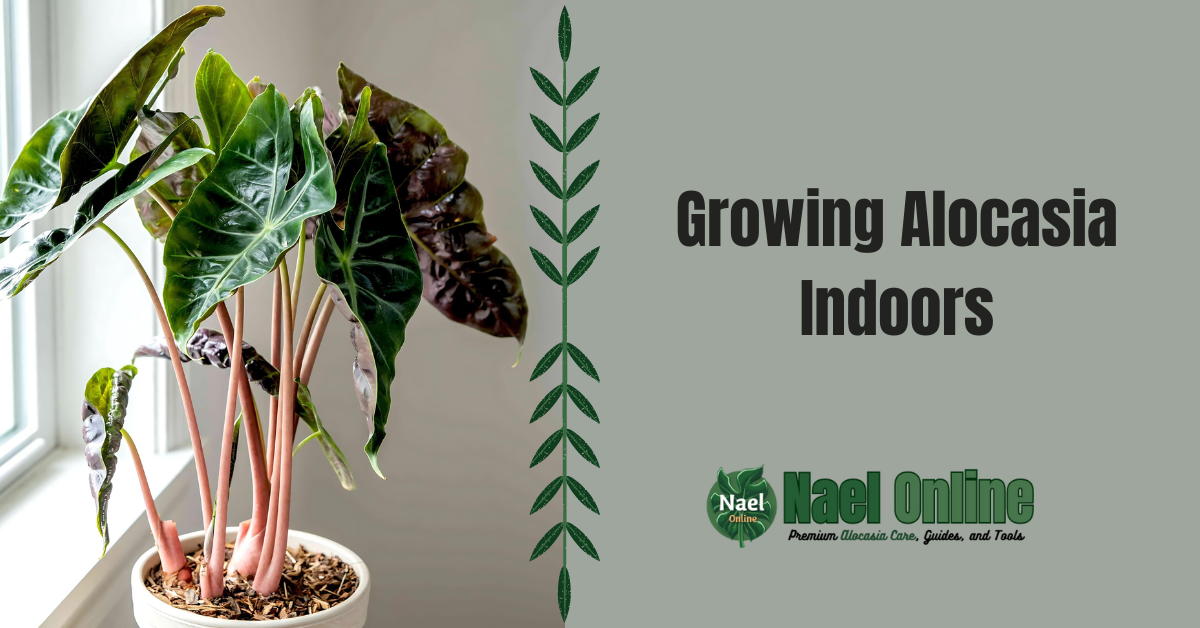
Not all Alocasias are created equal.
Some are more forgiving than others.
Here are the varieties I recommend for Nigerian growers:
Alocasia Amazonica (Polly)
This is the most common variety you’ll find in Nigeria.
It has dark green leaves with white veins.
Compact size makes it perfect for apartments.
It’s relatively hardy compared to other types.
Alocasia Zebrina
Known for its striking zebra-striped stems.
Gorgeous, but slightly more temperamental.
Needs consistent humidity and indirect light.
Alocasia Macrorrhiza (Giant Taro)
If you have space, this one’s a showstopper.
Large leaves that can grow over a meter wide.
Great for gardens or large living rooms.
More forgiving with watering mistakes.
Alocasia Frydek (Green Velvet)
Velvety leaves with prominent white veins.
Stunning, but needs higher humidity.
Best for experienced growers.
Start with Polly if you’re a beginner.
Move to Zebrina or Frydek once you’ve mastered the basics.
Light Requirements: Finding the Sweet Spot in Nigerian Homes
Alocasias love bright, indirect light.
Direct sunlight? That’s a no.
It will scorch those beautiful leaves faster than you can say “photosynthesis.”
But too little light? Also bad.
Your plant will grow leggy and weak.
Practical Light Solutions for Nigerian Apartments
Most Nigerian homes don’t have perfect lighting.
Here’s what I’ve learned:
Near a window with sheer curtains works brilliantly.
East-facing windows are ideal.
Morning sun is gentle enough not to burn.
If you only have west-facing windows (hello, afternoon Lagos sun), use a sheer curtain or move the plant 2-3 meters back.
North-facing windows work too, but growth will be slower.
What About Artificial Light?
If your flat is dark (common in Lagos), consider grow lights.
LED grow lights are affordable now.
You can find them at plant shops in Ikeja or order online.
Place them about 30-40 cm above your Alocasia.
Keep them on for 10-12 hours daily.
This mimics natural daylight cycles.
Signs Your Alocasia Isn’t Getting Enough Light
- Leaves turning pale or yellowish
- New leaves smaller than old ones
- Plant leaning heavily toward the light source
- Slow or no growth
Signs of Too Much Light
- Brown, crispy leaf edges
- Faded or bleached-looking leaves
- Leaves curling inward
Adjust accordingly.
Your plant will tell you what it needs.
Watering Alocasia in Nigeria: The Trickiest Part
This is where most Nigerian growers struggle.
How to water Alocasia in Lagos climate is one of the most searched phrases for a reason.
But not soggy.
And not dry.
See the problem?
Understanding Seasonal Watering Needs
Nigeria has two main seasons: rainy and dry.
Your watering schedule must adapt.
During Rainy Season (April – October):
Humidity is high.
Soil stays moist longer.
Water less frequently—maybe once every 4-6 days.
Check the soil before watering.
Stick your finger 3-4 cm deep.
If it’s still damp, wait.
During Dry Season/Harmattan (November – March):
Air is dry and dusty.
Soil dries out faster.
You might need to water every 2-3 days.
Mist the leaves occasionally to boost humidity.
Water Quality Matters
Lagos tap water can be harsh.
It contains chlorine and sometimes has high mineral content.
I’ve noticed my Alocasias respond better to:
- Rainwater (collect it during rainy season)
- Filtered water
- Tap water that’s been left out overnight (chlorine evaporates)
Watering Technique
Don’t just splash water on top.
Water thoroughly until water drains from the bottom.
This ensures the entire root system gets hydrated.
But always empty the drainage tray after 15-20 minutes.
Standing water = root rot.
And root rot = dead plant.
Signs of Overwatering
- Yellow leaves (especially older ones)
- Soft, mushy stems
- Foul smell from soil
- Leaves drooping despite wet soil
Signs of Underwatering
- Leaves curling inward
- Dry, crispy leaf edges
- Leaves drooping and feeling papery
- Soil pulling away from pot edges
Here’s a simple watering schedule table for reference:
| Season | Frequency | Humidity Level | Special Notes |
|---|---|---|---|
| Rainy Season | Every 4-6 days | High (70-85%) | Check soil first; reduce if soil stays wet |
| Dry Season | Every 2-3 days | Low (40-60%) | Mist leaves; watch for dust buildup |
| Harmattan | Every 2-4 days | Very Low (30-50%) | Increase misting; protect from dust |
| Transitional Months | Every 3-5 days | Medium (60-70%) | Adjust based on weather patterns |
Soil and Potting: Getting the Foundation Right for Alocasia Care in Nigeria
Soil is everything.
Get this wrong, and nothing else matters.
What Alocasia Needs in Soil
Alocasias need soil that:
- Drains quickly
- Retains some moisture
- Allows air to reach the roots
- Is slightly acidic (pH 5.5-6.5)
Regular potting soil from local nurseries often doesn’t cut it.
It’s too heavy.
It holds water too long.
This leads to root rot in our humid climate.
My Recommended Soil Mix for Nigerian Conditions
Here’s what works for me:
- 40% regular potting soil
- 30% orchid bark or coconut coir
- 20% perlite (for drainage)
- 10% compost or worm castings (for nutrients)
You can find these at plant shops in Lagos, Abuja, or online.
If you can’t find perlite, coarse sand works too.
Just make sure it’s not beach sand (too salty).
Potting Tips
Choose a pot with drainage holes.
This is non-negotiable.
Terracotta pots work great because they’re porous.
They allow soil to dry faster.
Plastic pots are fine too, just be more careful with watering.
Pot size matters.
Don’t go too big.
A pot that’s 2-3 cm larger than the root ball is perfect.
Too much soil = too much moisture retention = root problems.
Humidity: Your Alocasia’s Best Friend (and How to Maintain It)
Alocasias are humidity lovers.
They thrive in 60-80% humidity.
Good news: Nigeria’s climate naturally provides this.
Bad news: indoor environments (especially with AC or fans) can dry out quickly.
Natural Humidity Solutions
Group plants together.
Plants release moisture through transpiration.
A cluster of plants creates a mini humid microclimate.
Use a pebble tray.
Place a shallow tray filled with pebbles and water under your pot.
As water evaporates, it increases humidity around the plant.
Make sure the pot sits on pebbles, not in water.
Mist regularly.
Use a spray bottle to mist leaves in the morning.
Not at night—wet leaves at night can encourage fungal issues.
Bathroom placement.
If your bathroom has a window, it’s an ideal spot.
Showers naturally boost humidity.
When to Use a Humidifier
If you live in a very dry environment or run AC constantly, invest in a humidifier.
Small ones are affordable and effective.
Place it near your plant cluster.
Aim for 60-70% humidity.
You can check with a hygrometer (they cost about ₦2,000-₦5,000).
Feeding Your Alocasia: Nutrients for Growth in Nigerian Conditions
Alocasias are moderate feeders.
They need nutrients to maintain those big, beautiful leaves.
But overfertilizing is worse than underfertilizing.
Fertilizer Type
Use a balanced liquid fertilizer.
NPK ratio of 20-20-20 or 10-10-10 works well.
Organic options like fish emulsion or seaweed extract are gentler.
You can find these at nurseries or agro shops.
Feeding Schedule
During growing season (rainy season):
Feed every 2-3 weeks.
Dilute fertilizer to half the recommended strength.
Nigerian soil can be rich, so less is more.
During dormant period (dry season/harmattan):
Reduce feeding to once a month.
Or stop entirely if growth has slowed significantly.
Application Tips
Always water before fertilizing.
Never apply fertilizer to dry soil—it can burn roots.
Flush the soil with plain water once a month to prevent salt buildup.
Signs of Nutrient Deficiency
- Yellowing leaves (especially new ones)
- Slow growth despite good conditions
- Small, pale leaves
Signs of Overfertilizing
- Brown, crispy leaf tips
- White crust on soil surface (salt buildup)
- Leaves dropping suddenly
Listen to your plant.
Adjust as needed.
Common Pests and Diseases: Protecting Your Alocasia in Nigeria
Nigerian homes are humid.
Humidity attracts pests.
Here’s what to watch for:
Spider Mites
These tiny pests love dry conditions.
Common during harmattan.
Signs: Fine webbing on leaves, tiny dots on undersides, yellowing leaves.
Solution: Increase humidity, spray with neem oil solution, wipe leaves with damp cloth.
Mealybugs
White, cottony pests that cluster in leaf joints.
Signs: White fuzzy spots, sticky residue on leaves.
Solution: Remove with cotton swabs dipped in rubbing alcohol, spray with neem oil weekly.
Aphids
Small green or black insects that suck plant sap.
Signs: Curled leaves, sticky honeydew, visible bugs.
Solution: Spray with soapy water, introduce beneficial insects if possible.
Root Rot
Not a pest, but a fungal disease caused by overwatering.
Signs: Yellow leaves, mushy stems, foul-smelling soil.
Solution: Remove plant from pot, cut away rotted roots, repot in fresh soil, adjust watering.
Prevention is Key
- Inspect plants weekly
- Quarantine new plants for 2 weeks
- Keep leaves clean (dust attracts pests)
- Ensure good air circulation
- Don’t overwater
Neem oil is your best friend.
It’s natural, effective, and widely available in Nigeria.
Mix according to package instructions and spray every 7-10 days as prevention.
Dealing with NEPA and Power Issues: Keeping Alocasia Comfortable
Let’s be real.
Power supply in Nigeria is unpredictable.
NEPA (or whatever they call it now) will disappoint you.
Your Alocasia doesn’t care about your excuses though.
How Power Cuts Affect Your Plant
No fans = stagnant air = increased pest risk.
No AC = temperature spikes = stress.
No grow lights (if you use them) = inconsistent light cycles.
Practical Solutions
Strategic placement matters.
Place your Alocasia where it gets natural ventilation.
Near open windows (but not in direct sun).
Battery-powered fans.
Small, affordable, and effective.
Run them for a few hours to keep air moving.
Plan watering around power availability.
If you know power will be out for days, adjust watering to prevent fungal issues from stagnant moisture.
Generator use.
If you run a generator, prioritize humidity if you use a humidifier.
Even 2-3 hours daily helps.
Propagation: Growing More Alocasia Plants at Home
Once you’ve mastered care, you might want more plants.
Good news: Alocasia propagates relatively easily.
Division Method (Most Reliable)
Best done during repotting in rainy season.
- Remove plant from pot carefully.
- Gently separate offsets (baby plants) with roots attached.
- Plant each division in its own pot.
- Water lightly and keep in indirect light.
- Wait 2-3 weeks before resuming normal care.
From Corms
Alocasias produce underground bulbs called corms.
If your plant dies back during dormancy, don’t throw it away.
Those corms can sprout new plants.
Keep soil barely moist.
Wait for shoots to emerge (can take weeks or months).
Success Tips for Nigerian Conditions
- Propagate during warm, humid months.
- Use rooting hormone if available (optional but helpful).
- Be patient—growth can be slow initially.
- Keep new plants in higher humidity than mature ones.
Troubleshooting Common Alocasia Problems in Nigerian Homes
Let’s address specific issues I’ve encountered:
Leaves Yellowing
Possible causes:
- Overwatering (most common)
- Underwatering
- Nutrient deficiency
- Natural aging (if only bottom leaves)
Action: Check soil moisture, adjust watering, ensure proper drainage.
Brown Leaf Edges
Possible causes:
- Low humidity (especially during harmattan)
- Salt buildup from tap water
- Overfertilizing
Action: Increase humidity, use filtered water, flush soil monthly.
Drooping Leaves
Possible causes:
- Underwatering
- Root rot
- Temperature stress
Action: Check soil—if dry, water deeply; if wet, check roots for rot.
No New Growth
Possible causes:
- Insufficient light
- Dormancy (natural during dry season)
- Root-bound plant
- Nutrient deficiency
Action: Assess light, wait if seasonal, consider repotting, fertilize appropriately.
Dust Accumulation (Harmattan Season)
Dust clogs leaf pores and blocks light.
Action: Wipe leaves weekly with damp cloth, shower plant monthly.
Seasonal Care Adjustments: A Nigerian Alocasia Calendar
Your care routine should change with seasons.
Here’s my year-round approach:
January – March (Dry Season/Late Harmattan)
- Water every 2-3 days
- Mist daily in morning
- Wipe dust off leaves weekly
- Reduce fertilizing to once monthly
- Monitor for spider mites
April – June (Early Rainy Season)
- Increase watering to every 3-4 days
- Resume regular fertilizing (every 2-3 weeks)
- Good time for repotting if needed
- Watch for fungal issues due to increased moisture
July – September (Peak Rainy Season)
- Reduce watering to every 4-6 days
- Check drainage carefully
- Ensure good air circulation
- Peak growth period—expect new leaves
October – December (Late Rainy/Early Dry Season)
- Gradually reduce watering frequency
- Prepare for harmattan
- Cut back fertilizing
- Some varieties may enter dormancy
Adjust based on your specific location.
Port Harcourt stays humid year-round.
Jos has cooler temperatures.
Lagos swings between extremes.
Know your microclimate.
Creating the Perfect Indoor Spot for Your Alocasia
Let me describe my ideal Alocasia corner:
East-facing window with sheer white curtain.
Plant sits 1.5 meters from window.
Grouped with three other tropical plants.
Pebble tray underneath.
Small fan 2 meters away for air circulation.
Hygrometer nearby to monitor humidity.
This setup has kept my Alocasias thriving for years.
You don’t need fancy equipment.
Just thoughtful placement.
Why Your Alocasia Might Go Dormant (And Why That’s Okay)
Some Alocasias go dormant during dry season.
All leaves might die back.
First time this happened, I thought I’d killed it.
I hadn’t.
The plant was just resting.
What to Do During Dormancy
- Keep soil barely moist (water every 10-14 days)
- Don’t fertilize
- Keep pot in warmish spot out of direct sun
- Be patient
New growth will emerge when conditions improve.
Usually when rainy season returns.
Not all varieties go fully dormant in Nigeria.
But don’t panic if yours does.
The Cost of Growing Alocasia in Nigeria: Is It Worth It?
Let’s talk money.
Initial costs:
- Plant: ₦3,000 – ₦15,000 (depending on size and variety)
- Pot: ₦1,000 – ₦5,000
- Soil components: ₦2,000 – ₦4,000
- Fertilizer: ₦1,500 – ₦3,000 (lasts months)
- Neem oil: ₦1,000 – ₦2,000
Optional:
- Grow light: ₦8,000 – ₦25,000
- Humidifier: ₦10,000 – ₦30,000
- Hygrometer: ₦2,000 – ₦5,000
Ongoing costs:
- Minimal—fertilizer every few months, maybe ₦500-₦1,000 monthly.
Is it worth it?
For me, absolutely.
The joy of watching new leaves unfurl.
The beauty they add to my space.
The improved air quality.
Priceless.
But go in with eyes open.
These aren’t low-maintenance plants.
Building a Support System: Connect with Other Nigerian Plant Lovers
Growing plants is better with community.
Join Nigerian plant groups on Facebook, WhatsApp, or Instagram.
Share experiences.
Trade cuttings.
Get advice when things go wrong.
I’ve learned so much from fellow growers in Lagos and beyond.
Someone in Ibadan might have solved the exact problem you’re facing.
Community makes the journey easier and more fun.
Check out Lexivo for more plant care guides and local growing tips.
Final Thoughts: Your Alocasia Journey Starts Now
Growing Alocasia indoors in Nigeria requires attention.
It requires patience.
It requires adapting general advice to our unique climate.
But it’s absolutely doable.
I’ve seen complete beginners in Lagos succeed with these plants.
The key is consistency.
Pay attention to what your plant tells you.
Adjust your care based on seasons.
Don’t be afraid to experiment a little.
Every plant is different.
Every home environment is unique.
You’ll develop your own rhythm over time.
Start with one plant.
Master the basics.
Then expand your collection if you want.
Your Alocasia can thrive in your Nigerian home.
I promise.
Frequently Asked Questions About Alocasia Care in Nigeria
1. Can Alocasia survive in Lagos without a humidifier?
Yes, absolutely.
Lagos has naturally high humidity most of the year.
A humidifier becomes necessary only if you run AC constantly or during peak harmattan when indoor air gets very dry.
Group your plants together and use pebble trays—these natural methods work well for most Nigerian growers.
2. Why do Alocasia leaves turn yellow in Nigeria?
Yellow leaves usually indicate overwatering, especially during rainy season when soil stays wet longer.
Check your soil moisture before each watering.
If the soil is consistently soggy, reduce watering frequency and ensure your pot has adequate drainage holes.
Sometimes yellowing affects only the oldest leaf—this is natural aging, not a problem.
3. What’s the best soil mix for Alocasia in Nigerian climate?
A well-draining mix works best: combine 40% regular potting soil, 30% coconut coir or orchid bark, 20% perlite, and 10% compost.
This prevents the waterlogging issues common with pure potting soil in our humid climate.
You can find these components at plant nurseries in major cities or order online.
4. How often should I water Alocasia during harmattan season?
During harmattan (typically November to February), water every 2-4 days depending on your specific conditions.
Check soil moisture by inserting your finger 3-4 cm deep—water only when soil feels dry at that depth.
Increase leaf misting to combat the dry, dusty air that characterizes this season.
5. Can I grow Alocasia outdoors in Nigeria?
Yes, but with caution.
Alocasias can grow outdoors in shaded areas where they’re protected from direct afternoon sun.
Under trees or on covered verandas works well.
However, outdoor plants face more pest pressure and unpredictable weather.
Monitor them closely and bring them indoors during heavy storms or extreme heat.
6. What are the signs of root rot in Alocasia and how do I fix it?
Root rot shows up as yellowing leaves (often multiple at once), mushy or blackened stems, foul-smelling soil, and leaves drooping despite wet soil.
To fix it: remove the plant immediately, cut away all brown/mushy roots with sterile scissors, repot in completely fresh, well-draining soil, and adjust your watering schedule to prevent recurrence.
7. Where can I buy healthy Alocasia plants in Nigeria?
Quality Alocasia plants are available at specialty plant shops in Lagos (especially in Lekki, Ikeja, and Victoria Island), Abuja, and Port Harcourt.
Online plant vendors on Instagram and Facebook also ship nationwide.
Always inspect plants carefully before buying—check for pests, ensure leaves are firm and vibrant, and verify the seller’s reputation through reviews.
8. How long does it take for a new Alocasia leaf to fully unfurl in Nigerian conditions?
In optimal conditions during rainy season, a new leaf typically takes 1-2 weeks to fully unfurl from the time you first notice it emerging.
During dry season or if conditions aren’t ideal, this can extend to 3-4 weeks.
The process is slower than many other houseplants, so patience is essential—forcing or unrolling leaves manually will damage them.
About the Author: Luca William is a plant enthusiast and indoor gardening expert based in Nigeria. With years of hands-on experience growing tropical plants in Nigerian conditions, Luca shares practical, research-based advice on Lexivo to help fellow plant lovers succeed with their green spaces.


